The Razorbill, christened Alca torda in scientific nomenclature, embodies the robust spirit of the northern seas. As a member of the auk family, this bird is uniquely adapted to life in the cold, turbulent waters, making its home along the rocky coastlines of the North Atlantic. With a sleek appearance and a distinctive bill, the Razorbill is an emblematic figure of northern marine ecosystems.
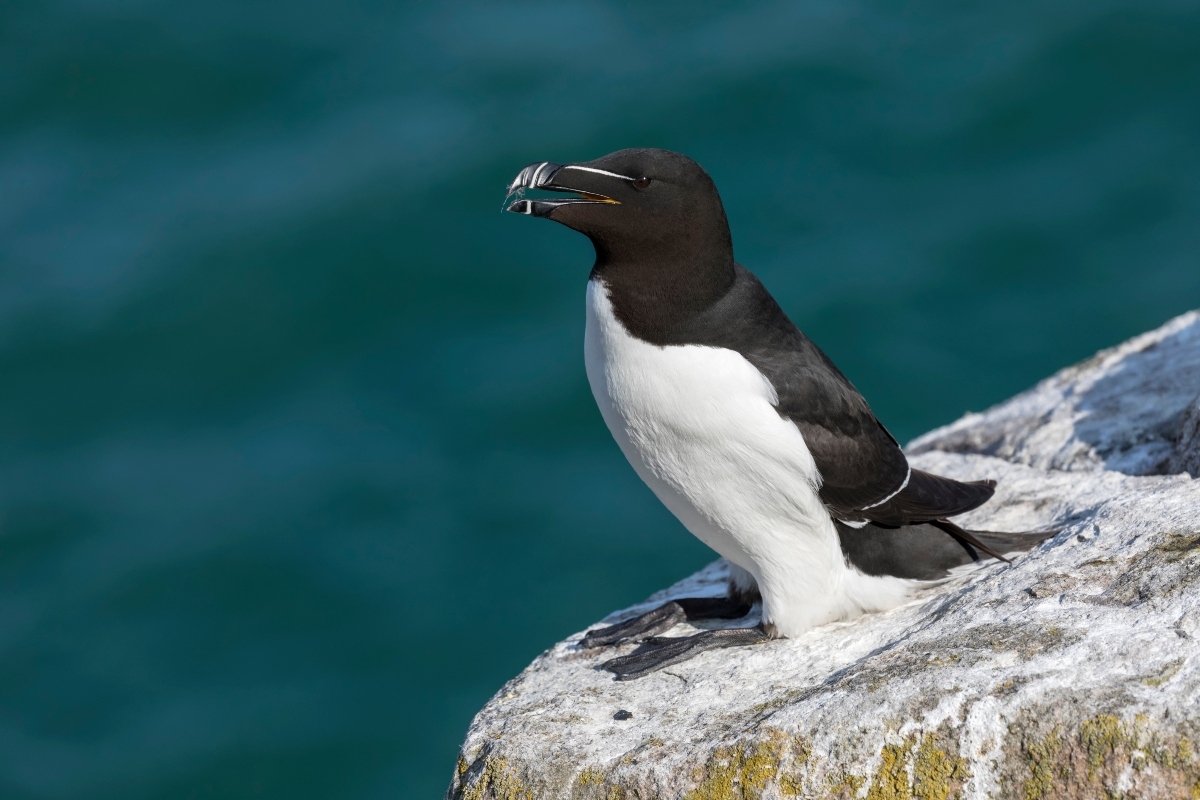
Typically reaching lengths of 15 to 17 inches with a wingspan approaching 26 inches, the Razorbill’s compact form is accentuated by its deep black upperparts and contrasting white underbelly. One of its most striking features is its large, flattened bill, which is adorned with a white line and lends the bird its evocative name.
While they might spend most of their lives at sea, Razorbills are known to frequent rocky cliff edges during breeding seasons. Their preferred nesting grounds stretch across the North Atlantic coasts, from New England and Eastern Canada to Northern Europe.

Diving prowess is where the Razorbill truly shines. With streamlined bodies and strong wings, they plunge into the oceanic depths, sometimes reaching up to 120 meters, in pursuit of fish and small marine creatures. Sand eels, sprats, and capelin often feature prominently in their diet.
The reproductive behaviors of the Razorbill are steeped in loyalty and fidelity. They are monogamous, often forming bonds that last a lifetime. Nests are typically mere scrapes on cliff edges or hidden among boulders. Remarkably, a single egg is laid per season, and both parents take turns incubating it. Once hatched, the chick’s reliance on its parents is brief; in mere weeks, it will take its maiden flight and head to sea.

Conservation of the Razorbill has become paramount in recent years. Threats like oil spills, overfishing, and marine pollution have impacted their habitats and food sources. While certain populations remain stable, proactive efforts are necessary to ensure their continued survival.
In various coastal communities, the Razorbill holds a place of cultural significance, often symbolizing the wild, untamed essence of the ocean. Their annual return to breeding grounds is anticipated and celebrated as a mark of changing seasons.
For marine biologists, conservationists, and bird enthusiasts, the Razorbill is a testament to the beauty and resilience of marine avian life. Their dramatic cliffside behaviors, synchronized flights, and deep dives echo the rhythms of the tumultuous North Atlantic. As sentinels of the seas, Razorbills continue to inspire awe and respect among those fortunate enough to witness their maritime ballet.